Leave a line unrhymed when you want a particular word, image or interruption to outlast the pattern you’ve set up. Try writing two rhyming pairs, then let a third pair end on a different sound. Read both endings into the same next line. Keep the break if you can name what it makes you notice. A new sound can interrupt the rhyme even when the sentence and melody feel complete.
Give the ear a return it can miss
Two people are watching an old family film. First we hear door and floor. Two lines later, so comes back as snow. Read those four endings aloud in time with your finger tapping on the table. By the time you reach screen in line five, you may already be listening for an answering sound. That expectation is something you can write with.
Start with a pair you actually like. The rhymed ending below gives the two people a moment to share. If you begin with a tortured rhyme, almost any replacement will feel like a rescue. Here the question is harder: is there a reason to give up a rhyme that already works?
Change one word while the picture holds still
In the first version, the thumb comes down and the rhyme answers: screen, scene. Hold the last vowel for a beat. It echoes the one you just sang or spoke. The word scene also leaves room for the dog, the snow and the whole afternoon around the mother. A singer could dwell quite happily there.
Now try frame. The mouth makes a different vowel and the word narrows the picture to a single instant. The raised mitten matters because the film stops before the hand comes down. You have changed sound and meaning together. To hear what each contributed, speak only “screen / scene” and “screen / frame”, then read the lines with their nouns restored. The bare sound pairs can’t tell you which image belongs in the song.
At the writing desk
A family film, paused on the same wave
First thought
I thread the reel. You shut the door.
A square of light spills on the floor.
Your father tips his hat just so.
A dog trots past him through the snow.
Mum lifts a mitten on the screen.
Your thumb comes down. We hold the scene.
Another way in
I thread the reel. You shut the door.
A square of light spills on the floor.
Your father tips his hat just so.
A dog trots past him through the snow.
Mum lifts a mitten on the screen.
Your thumb comes down. We hold the frame.
- Door/floor and so/snow set up two successive pairs. Screen offers a third sound for the last line to answer.
- Scene completes the third pair. Frame takes the same one-syllable position and directs attention to the held image of the mitten.
- Carry on with “Let her wave again” after each version. Listen for whether the next line feels like a fresh request or part of the same breath.
Original teaching lyrics. Only the last word changes. The chorus entrance stays fixed for the comparison.
Listen one line past the missing rhyme
Give both versions the same chorus entrance: “Let her wave again.” Leave the same space before it each time. After scene, the request arrives after a pair has landed. After frame, it can feel as though the request is tugging a stuck picture back into motion. Try the opposite reading too: the rhyme in scene might make the stillness so complete that the request feels more urgent.
Pat Pattison’s Berklee lesson treats rhyme arrangement, phrase count, phrase length and rhythm as separate choices a writer can adjust. For this comparison, give each last word the same note length and place the next line on the same beat. If you also stop playing for a whole bar in one version, save that as another take. The silence deserves its own comparison.
What if the break barely registers?
Try saying the lines as ordinary sentences. “Your thumb comes down. We hold the frame.” The thought finishes quite firmly. A singer can make the last note feel settled too. An unrhymed word leaves a sound unanswered within these six lines. It can still give you a decisive ending. If you want the request to spill across the boundary, play with how soon you enter on “Let” as a second experiment.
If you prefer the little click of screen and scene, keep it. A missing rhyme earns its place when it helps the particular moment you are writing. It needn’t announce a shock or make a listener feel uneasy. For your decision note, try something you could act on tomorrow: “Keep frame for the close-up. Rehearse the gap before Let.”
Make a map you can bring to rehearsal
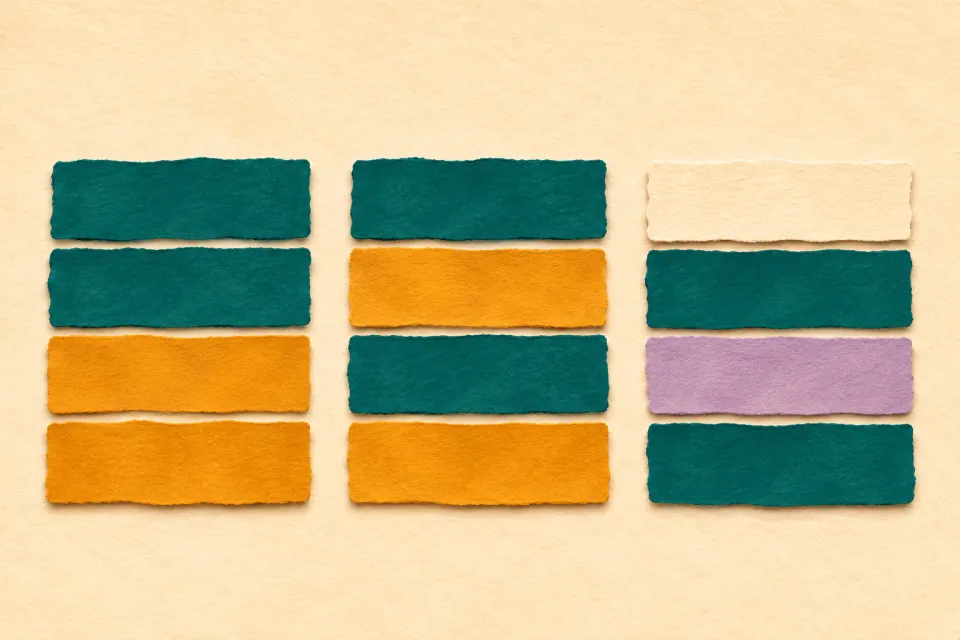
Copy just the six lyric lines into the rhyme scheme planner. For the rhymed take, choose A, A, B, B, C, C in the six sound-family menus. For the open take, use A, A, B, B, C, D. Here D means you heard a new ending. Both C and D occur only once in that version. The interruption we are testing happens on line six, where a second C could have landed.
Assign the letters yourself after listening. Editing the text clears the planner’s labels. Download the labelled lines if you want to keep one take before pasting the other. Use the scratchpad below for the two endings, the fixed chorus entrance and your reason for choosing. Download those notes before leaving the lesson.
Audition the rhyme you could leave out
Spend two minutes marking the end sounds in your own six lines, or use the practice verse below. Take three minutes to give line six a rhymed and an unpaired last word that both make sense. Spend three minutes reading or singing both takes into the same next line, in both orders. In the final two minutes, save the ending you want and a note about what it gives you and what you lose.
- Can I hear the earlier pairs strongly enough to expect another return?
- Have I given both endings the same pause, pulse and next line for the first comparison?
- Can I name a word or image worth keeping and something the other version does better?
A scratchpad, not a saved project. Copy or download your work before leaving.
You choose when to load this into your draft. No AI generation starts automatically.
A few useful answers.
Does every line of a song need to rhyme?
No. You can connect lines through a repeated phrase, rhythm or image. This exercise starts with a noticeable rhyme pattern because it gives you a specific expectation to interrupt. A verse with no established pairs offers a different listening experience.
Should I use X for an unrhymed line?
You can use X on paper if you define it as an unpaired ending. In the linked planner, give the sound a fresh letter. For screen followed by frame, C then D shows two different endings. Neither one needs a partner for the map to be useful.
What if I hear a near rhyme where someone else hears none?
Write down the sounds you connect in your own delivery. Ask your collaborator to sing the two endings back with the intended vowels and stress. If the near rhyme still gives you the return you meant to interrupt, try a more distant final word and compare again.