To move through time in a lyric, give the listener a cue they can hear at each jump and something they can recognise across the scenes. Try a present moment, a memory and a return linked by one object. Change what happens to that object so the memory affects the present. Read the passage without labels such as FLASHBACK: if the order becomes unclear, add an age, a time phrase or a clearer action before explaining the missing years.
Give the song a present to return to.
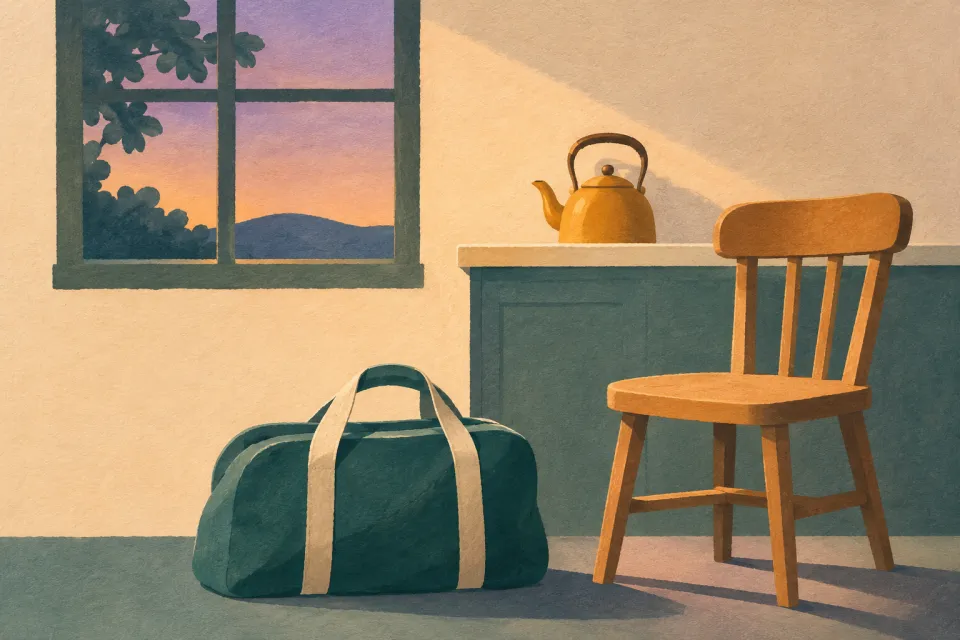
Choose the moment from which the narrator is telling the story. Our original practice lyric begins tonight: the narrator finds an old lunch tin behind winter coats, sees their name under its latch and presses its damaged corner closed. Start with these four lines from the scratchpad. We have a person doing something now, rather than an unexplained tour through several ages.
Andrea Stolpe’s 4 Questions to Find Your Song asks writers to locate the singer before, inside or beyond an event, and consider why the story is being told today. Use that question to choose the frame here. Finding the tin is our reason to remember; packing it for the narrator’s daughter will give the memory a consequence. This three-scene exercise is our application, not a rule from the source that all songs need flashbacks.
Keep the tin. Change who handles it.
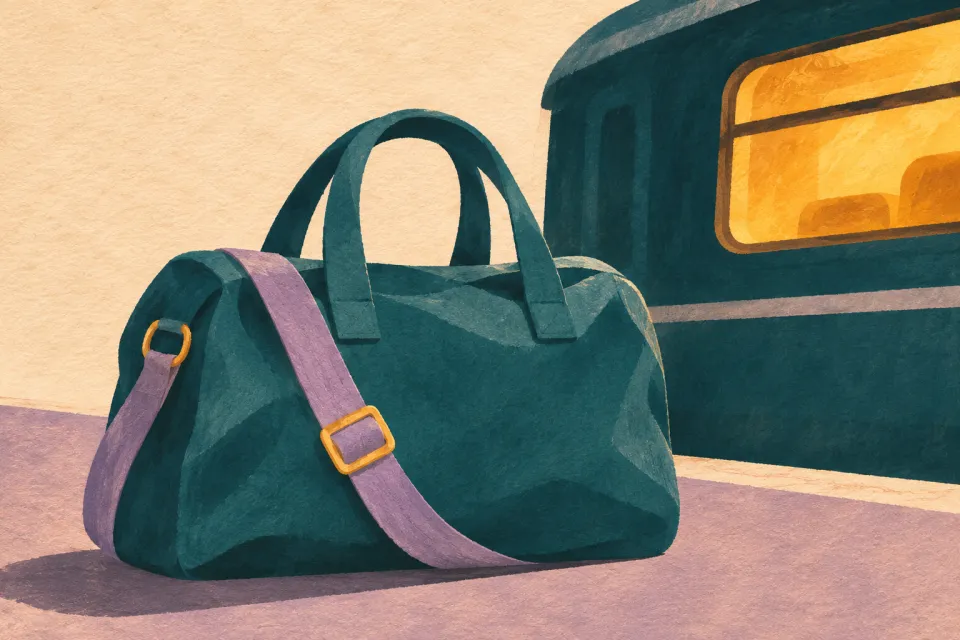
The tin carries recognisable details across the jump: its bent corner, the narrator’s name and the act of packing food. In the memory, the father packs it for the narrator as a child. In the return, the narrator packs an apple for their daughter’s trip. One object connects three actions; you do not need to account for everything that happened between childhood and tonight.
Decide what stays physically possible. The father’s old workaround and the narrator’s present pressure can both close the same damaged corner. The daughter writes her name on the lid while the narrator leaves the older name under the latch. Two names can coexist in different places. Nothing in these lines says whether the father is alive, whether the family is close, or how often the tin has been used. Do not supply those facts just because the object feels nostalgic.
At the writing desk
An unplaced memory → a childhood cue
First thought
My father packs the dented tin
With apples, bread and yellow cheese
He presses on the corner twice
And sets it by my muddy shoes
Another way in
At ten, I watched my father pack
That tin with apples, bread and cheese
He pressed the corner till it caught
And put it by my muddy shoes
- The opening scene is tonight. The before version does not make clear whether the father’s packing belongs to that evening or another time.
- The revision identifies a childhood age and changes the passage to past tense. It also uses “That tin” to connect with the object in the opening.
- “At ten” is compact but could mean ten o’clock on first hearing. “When I was ten” is an explicit alternative to test in the phrase.
- The same tin provides continuity; the time cue provides orientation. Neither device tells the listener how to feel.
Original teaching lyrics. This is a written orientation test; no performed arrangement or listener result is claimed.
Put the time cue inside the lyric.
Place the before version from the comparison after our opening scene. “My father packs” might describe something happening tonight, a recurring habit or a memory made immediate. The words alone do not settle which. The revision begins “At ten, I watched my father pack”, locating the narrator at a childhood age. “That tin” points back to the object we already saw, and watched, pressed and put keep this particular passage in the past.
“At ten” could initially sound like a time of day. If that ambiguity lasts too long in your delivery, try “When I was ten, my father packed” as the first line. It is more explicit and needs a different phrase shape. Present tense is also available for a vivid memory: “When I was ten, this was our morning” could set up a present-tense scene that follows. The aim is an understandable jump, not a blanket ban on tense changes.
Come back with something to do.
The last four lines start “Back in the kitchen now, I pack”. That phrase brings us out of the childhood scene before the daughter appears. Otherwise she might be mistaken for someone in the remembered morning. Packing an apple echoes the father’s action; leaving the older name beneath the latch allows the tin to carry both histories. The physical action makes a connection without a final line explaining what the narrator has learned.
Try a flatter return: “The years went by and things have changed / I think about those days again.” It tells us that time passed but does not show what remembering changes tonight. That summary could suit a reflective song; for this exercise, keep the packing because it gives the narrator a next action. You gain an observable connection and leave the narrator’s precise feeling open. Nostalgia, gratitude and unease would each need support from the rest of the song or its performance.
Remove your labels and test both orders.
Read all twelve lines in present–memory–return order without saying the scratchpad headings. After each scene, privately note when it happens, who handles the tin and which sung words tell you. The return is still tonight; “now” does not mean another year has passed. If you need your planning notes to explain a jump, revise that boundary. A listener can describe the order if one is available, but your own intention is not evidence of what they heard.
Now try memory–present–return. Replace “That tin” with “My tin” in the memory, because its earlier reference has moved. This chronological version gives the family history before the discovery; the framed version lets the discovery prompt the memory. Neither order is inherently stronger. Choose the sequence that best serves why the narrator tells this story tonight, and note the cost. Check the joins and sing the cues in your melody separately; this written comparison does not establish musical pacing.
Save the passage and the unresolved test.
Use the scratchpad for your three scenes and the two boundary checks. Download the text before leaving or reloading because the scratchpad is temporary. Continue in workspace shows the text for you to confirm before it replaces your draft; the previous draft is backed up in that browser. Opening it starts no generation. Keep the question you still need to test alongside the chosen order.
For a separate outline, open the companion structure builder. Download any outline you want to keep, choose Blank outline, and use Add section three times. Rename the rows Present, Memory and Return, then manually enter each scene’s time cue, object and action in its purpose field. These are planning names, not required song-section labels. Download that outline too. The builder does not interpret time shifts or receive this scratchpad automatically. Its duration estimate assumes 4/4 and a constant tempo; default bars do not tell you how long these lyrics will take.
One object. Two jumps. Three scenes.
Spend two minutes choosing an object and why it matters today. Use six to write a present scene, a memory and a return of four lines each. Spend three removing the labels and checking both time boundaries. Use three to try chronological order and repair any reference that moved. Spend two choosing an order, naming its tradeoff and saving the draft plus the next listening test.
- Can I locate both time jumps without reading out my private headings?
- Does the returning object lead to a new action, rather than simply appear again?
- Have I checked moved references and separated facts in the lyric from a backstory I am supplying?
A scratchpad, not a saved project. Copy or download your work before leaving.
You choose when to load this into your draft. No AI generation starts automatically.
A few useful answers.
Do I need a date for every time shift in a song?
No. An age, “last winter” or “back in the kitchen now” can orient the scene. Use the amount of detail your story needs. If an exact year does not affect the meaning, it may take space without helping. Test whether the change is understandable without your written headings.
Can a flashback use present-tense lyrics?
Yes. A clear setup can establish a remembered scene that is then told as if it is happening. The problem is an unintended uncertainty about when the action occurs, not present tense itself. Compare an explicit setup with a past-tense version in your actual delivery.
Does a returning object have to symbolise something?
No. Start with something a person can find, use or pass on. In the example, the tin is packed by two generations. That action creates a connection; you can leave its interpretation open rather than label it as a symbol of love, loss or inheritance.
What if chronological order is clearer than my flashback?
Keep it if it serves the song. The memory-first version supplies history before the present discovery; the framed version lets discovery prompt the memory. Check references such as “that tin” after reordering. A flashback is an option, not an achievement every song needs.