Copy the verse and write down the one fact a listener must still understand after the edit. Choose a prompt that addresses a particular weak line. Try its instruction on the copy, put the revised line back between its neighbours, then keep or undo it. In the exercise below, you’ll write a message in the narrator’s voice and borrow one phrase for the verse.
Name the fact you want to keep
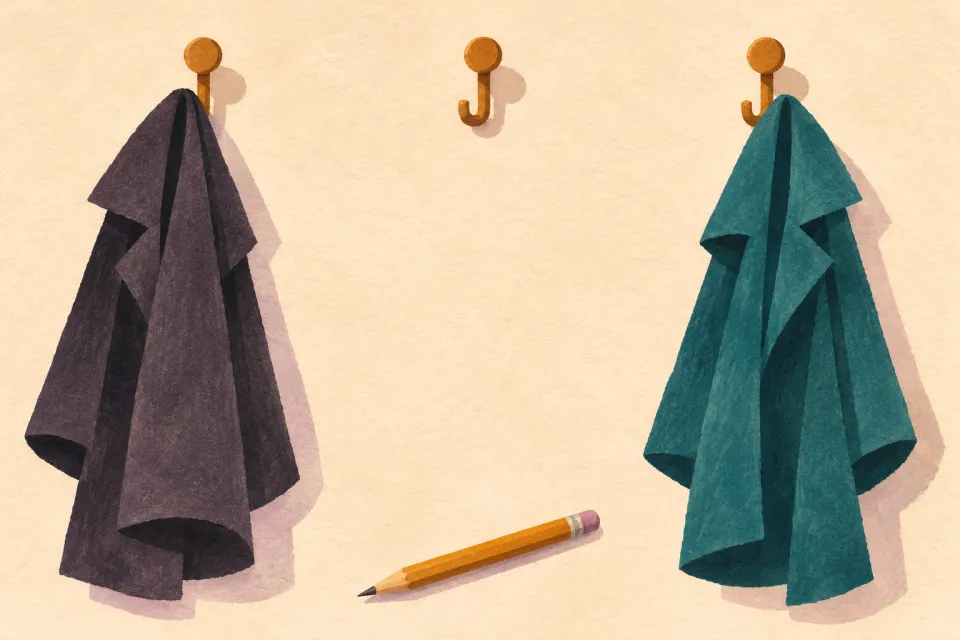
Here’s the fact in our practice verse. Someone has painted the kitchen doorframe green and deliberately spared a pencil height mark. You can change the colour or the room in your own draft. In this one, the mark has to survive because the painter chose to leave it there. That little distinction matters. A pencil line that shows through thin paint tells a different story.
The line up for revision is “There are things I’ll never let go.” It could belong to somebody keeping a concert ticket or a string of voicemail messages. The other three lines belong to this particular kitchen. Copy the verse twice and underline that one line on the second copy. You now have a small enough job for a prompt.
Pick a card that fits the snag
Open the songwriting prompt generator and choose Revision. Use Try another prompt until you reach “Read it as a message”. When I tested the deck, it was the third card in that category. The card asks you to imagine what the narrator would write to someone, then bring one phrase back. That suits a verse whose speaker suddenly starts making grand pronouncements.
Put the four lines and your protected fact into the field labelled “A few lines to begin”, or work on paper. If you use the deck, your notes stay in the box when you change cards. Download them before reloading or leaving. With notes in the box, Download .txt exports the notes themselves. Type the card title in your notes if you want it in that file too.
At the writing desk
One message phrase goes back into the kitchen verse
First thought
Two coats of green on the kitchen frame.
Your pencil mark still shows.
There are things I’ll never let go.
There’s green on the side of my phone.
Another way in
Two coats of green on the kitchen frame.
Your pencil mark still shows.
I went round it.
There’s green on the side of my phone.
- Only line three changes. Both versions leave the pencil mark visible on a painted doorframe.
- “I went round it” lets us infer the painter’s attachment from the path of the brush. The old line states that attachment outright.
- The clipped ending on “it” gives up the open vowel of “go”. Sing the surrounding lines before you decide which ending belongs in your melody.
Original teaching verse and unsent message. Use the page’s scratchpad to try your own pair of lines.
Write the message that would come with the picture
Imagine the painter took a picture on their phone and sent it to the person whose height it records. What would the caption say? Try writing it as fast as you would text someone who already knows the kitchen. Here’s mine. “Kitchen’s green. You remember that pencil line? I went round it. Got paint all over my phone taking this for you.”
“I went round it” is the bit I’d lift. It gives the painter a small job you can picture, and “it” already has somewhere to point in line two. A tempting second try was “It wouldn’t wash off.” That sounds just as plausible in a text, but now the mark has survived an attempt to remove it. The exercise has found a different song. Save that line in the margin if you like it.
Put the borrowed phrase back between its neighbours
Read these three lines together: “Your pencil mark still shows. / I went round it. / There’s green on the side of my phone.” Line two answers a question the first line leaves open. The mark is visible because somebody steered a wet brush around it. By the time the phone appears, I can imagine who might get the picture. The lyric can leave that last step to the listener.
Read the first draft over the same pulse. “There are things I’ll never let go” gives you a long vowel on “go” and a promise you can sing out. “I went round it” ends with a clipped syllable and leaves more room. Try singing “round” across the long note, then dropping “it” just after. If the melody really wants the promise, keep the “let go” line or try the message again. The card has given you a choice.
Save the two lines and your reason
Give both versions a fair hearing by starting on the same preceding line. Ask two questions. Can someone still tell what the painter did on purpose? Does this sound like the person whose thumb is covered in green paint? My choice for a quietly spoken verse would be “I went round it.” For a chorus that needs a promise on a held note, I’d put a star beside “let go” and come back to it.
Leave yourself a note short enough to use at rehearsal. Mine would say “Try the brush line first. If the last syllable gets swallowed, sing both takes over the same two bars.” Keep the original, the trial and that note together in one download. You can return to the line tomorrow without first having to remember why you changed it.
Try one prompt on four lines
Take two minutes to copy a verse and name one fact it needs to keep. Spend two writing a message from its narrator to one particular person. Use three to borrow a phrase, change one line and read both versions from the line before it. In the last three minutes, write down your choice, what it costs musically and the next thing you want to hear. Download the pair before you leave.
- Can I point to words in the revision that preserve who did what?
- Did I read both versions with the same lines on either side?
- Does my saved note include both options and a reason to try one first?
A scratchpad, not a saved project. Copy or download your work before leaving.
You choose when to load this into your draft. No AI generation starts automatically.
A few useful answers.
What if the prompt sends my verse in a different direction?
Write the new idea on a separate line and check your original fact. “It wouldn’t wash off” could start a good verse about an unwanted reminder. For the painter who chose to save the mark, borrow a phrase that still shows that choice.
Do I need to paste my existing lyrics into the prompt generator?
You can read the card and do the whole exercise on paper. If you want a text export from the deck, enter the words you want to keep in its notes field and use Download .txt before leaving.
Can I keep the old line after trying the prompt?
Yes. Write down what you heard that made you keep it, such as a vowel that carries the longest note. Save the new line beside it. You can try it again if the melody or the narrator’s tone changes.