Give your chorus something to say.
Learn how to write a chorus around one clear idea, with an original before-and-after example and a practical writing exercise.
Read the guide: Give your chorus something to say.Free printable worksheet
Use this songwriting worksheet to decide what your song is about, what changes between its sections, and what you will write next. Complete the prompts briefly; an imperfect outline is enough to start a draft.
Example: I keep making room for someone who is not coming back.
Example: Says they have moved on; keeps the spare key on its hook.
Example: A key on a hook, the kettle clicking, the porch light.
Example: The narrator keeps the old routines.
Example: The porch light stays on for someone who has gone.
Example: A new morning reveals the cost of waiting.
Example: The narrator puts the key away, just for tonight.
Example: Write four lines around one object, then read them aloud.
Your notes stay on this page until you leave or reload. Download a copy to keep them.
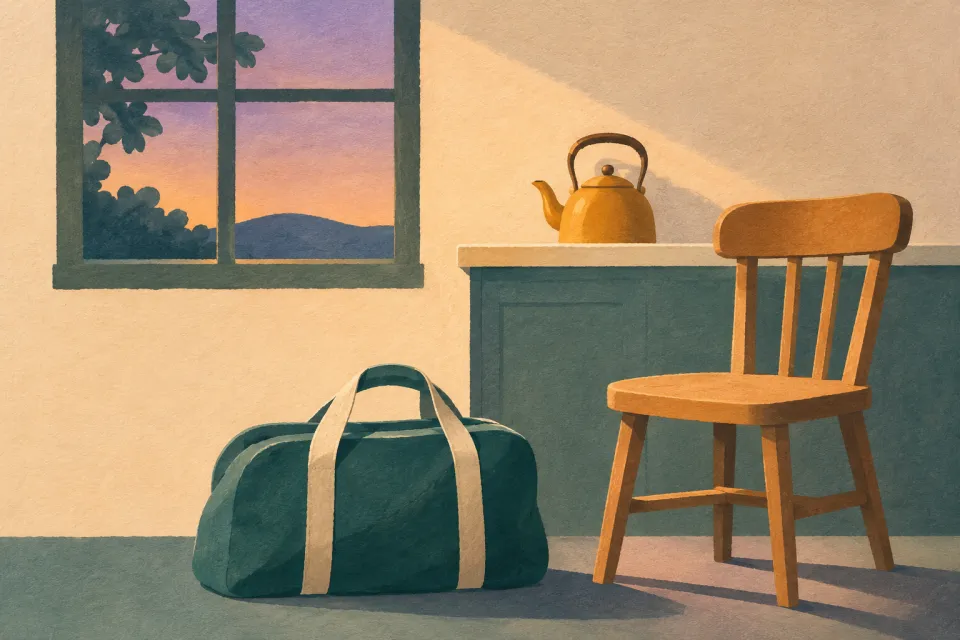
Write what the narrator says and what the narrator does. A difference between the two can give a song energy: someone may insist they are ready to leave while keeping a packed bag beside the door.
If that approach does not fit your song, write a question instead. The worksheet supports exploration; it is not a requirement to build every song around conflict.
Use a verse to establish the scene, a chorus to return to the central idea and another verse to reveal something new. These are possible roles, not universal rules. Cross out any section that the song does not need.
Our filled-in example keeps one object, a spare key, across several sections. It is a thread that makes the song feel connected while the narrator’s relationship to waiting changes.
End the worksheet with a small task you can finish in one sitting: write four chorus lines, find a concrete detail for verse two, or sing the opening phrase at a comfortable pace. “Make the song better” is harder to act on.
Print the page or download the plain-text worksheet. Neither action needs an account. If you use the workspace, you can load an outline only after choosing to do so; the worksheet does not spend credits.
Yes. Print or download it and write by hand or in any editor. The worksheet is a planning aid that stands on its own.
No. Remove or adapt sections to suit your song. A short verse-and-chorus exercise is a complete and useful starting task.
Learn how to write a chorus around one clear idea, with an original before-and-after example and a practical writing exercise.
Read the guide: Give your chorus something to say.Write a second verse that develops the story rather than repeats the first, using three original alternatives and a scene-changing exercise.
Read the guide: Your second verse needs somewhere to go.Learn how to write a song bridge that changes perspective, with an original example and a practical test for whether your song needs one.
Read the guide: Let the bridge change your mind.